Case study 01 · A book from our own publishing desk
From a first idea
to a real book.
This is what The Publishing Chain made possible: Two Seasons, One Bed, a complete gardening book by Avery Lind, brought through writing, editing, design and publication.
Our publisher’s estimate, excluding waiting time and pauses.
Project record: 8–17 October 2026. This is our own completed project, not a promised completion time for every book.
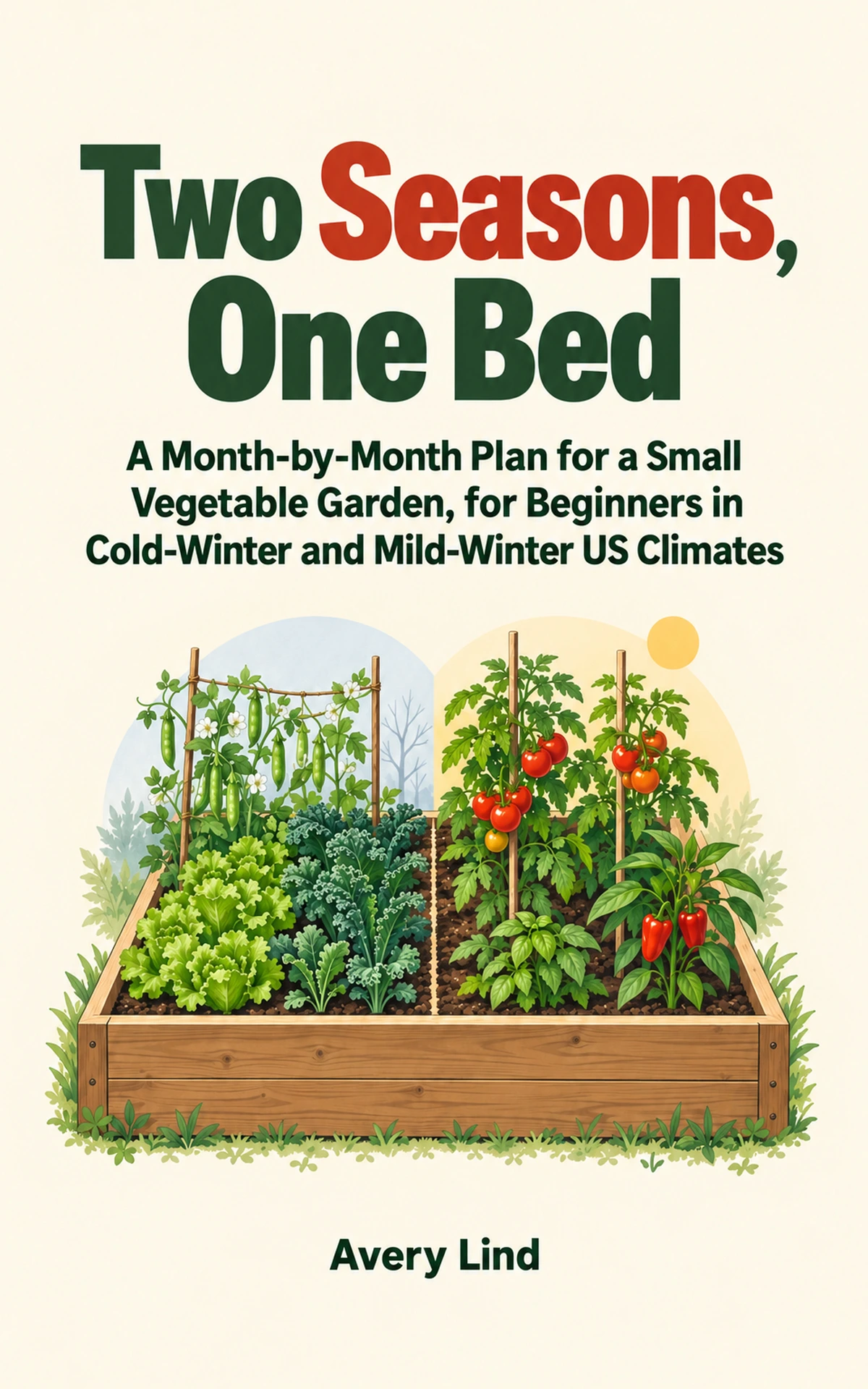
Kindle & paperback
01 / The result you can see
A small garden.
A complete year of guidance.
One 4-by-8-foot bed. Two winter climates. A month-by-month plan with planting jobs, spacing, timings and a way to work through problems. These are pages from the actual final paperback file.
A few lines from chapter 1
“A seed packet gives timing for a general case. Often it counts weeks before or after the last frost. Sometimes it names a season. It cannot say when your last frost comes or what your winter does to a lettuce.”
Two Seasons, One Bed · “Which Winter You Have”, page 9
Designed as one complete book
Front. Spine. Back.
All considered.
The front introduces the two seasons. The back explains the promise. The full paperback cover brings them together, with a plain spine and space reserved for the retailer’s barcode.
02 / One connected process
Every part leaves
something useful behind.
The next part starts with the previous part’s decisions and files. Here is how that connection turned a gardening idea into a finished book, and what the final reading guide adds after publication.
00SetupGive the book a foundation.
The project began with a publishing route, two chosen formats and one place for the decisions and files. The choice was an e-book and a paperback, with a separate record for this book.
A project folder, publishing decisions and opening-page material.
01Niche & MarketFind a reader worth writing for.
A broad gardening idea became a specific promise: help a US beginner plan one small vegetable bed through the year, with separate guidance for cold and mild winters. Research shaped the scope before chapters were drafted.
A defined reader, a focused subject and a clear book promise.
02The AuthorMake the voice consistent.
The Avery Lind author profile established a practical, direct voice. Writing rules and examples gave the chapters a shared tone and kept the advice at a beginner’s level.
An author profile, voice rules and a public author bio.
03Writing the BookTurn the plan into complete chapters.
The manuscript grew chapter by chapter, with review and approval between stages. Fifteen chapters cover climate, setting up the bed, every month of the year and troubleshooting. Crop profiles and sources complete the reference material.
A full manuscript, chapter records and an illustration plan.
04Editing & PreparingCheck what the book actually says.
The system checked structure, consistency, references, measurements and wording. Review findings were compared with the manuscript before changes were accepted. Twenty-one illustrations were prepared for the book.
An approved edited master, illustrations and a recorded change list.
05The BuildMake a book readers can use.
The approved manuscript became a reflowable e-book and a 6 × 9-inch paperback interior. Contents, tables, page breaks and figure labels were checked in the finished formats, with corrections where needed.
An EPUB and a 174-page print PDF from the same master.
06PublishingTake it onto the bookshelf.
A front cover, complete paperback cover and listing description were prepared. Converted previews were reviewed and repaired. Publication followed the publisher’s approval; both editions were confirmed live by 17 October.
The Kindle edition, the paperback and the publication record.
07After PublicationKeep the next steps clear.
The final part is a reading guide for what comes after release: the author presence, reviews, promotion and learning from the book’s results. It is a reference to return to, rather than another required production stage.
A guide for follow-up. Sales and promotion results are not claimed here.
03 / The work between draft and finished
A draft is a start.
Review makes it better.
The first output was reviewed, corrected and checked again. This real comparison shows how small illustration problems were repaired before the paperback was approved.
- Make diagrams readable.Grid lines were moved clear of letters. Crop labels were rewrapped so their meaning stayed together.
- Keep the promise.A missing cost-and-time comparison was restored when a shorter chapter no longer delivered its outline.
- Check the finished format.The contents were simplified. Page breaks, tables and all 21 figures received attention in the production files.
Comparison: page 95, earlier print file and final print file. The final converted paperback preview was checked across all 174 pages.
04 / Beyond the project folder
Published.
There to be read.
The Kindle edition is on Amazon. The publisher also confirmed the paperback live on 17 October 2026. Follow the link to inspect the public listing yourself.
View the book on Amazon ↗Paperback: 174 pages, 6 × 9 inches.
Kindle: a reflowable edition; Amazon’s displayed page estimate may differ.
This case study demonstrates a completed publishing project. It does not claim sales, earnings, reader reviews or independent customer results.
A book made. A system improved.
The work fed back
into the guides.
This project also gave us a concrete improvement list: clearer handovers, more consistent chapters, stronger approval points and better production checks. Those lessons informed the revised parts 0–7 now available on this website.
A publisher-led case study, documented from our own project files. The revised edition has not yet completed a separate end-to-end trial with an independent beginner.
Your book starts with a first decision.
See what the system
can help you build.
Choose the part your book needs, or keep the complete process at hand. The full package includes all eight guides, the build pack, email support and future updates.